
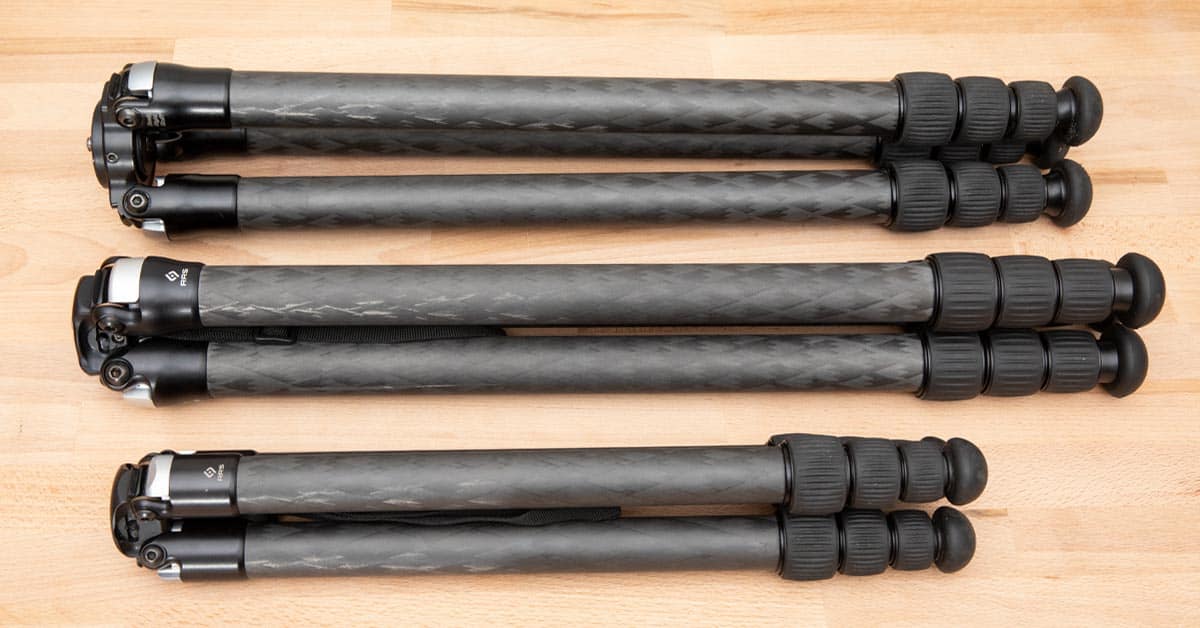
There comes a time in every photographer’s life when they need to buy a tripod. Sadly, many people screw this up and buy the cheapest option they can find, only to have it break within a year or two, doing more harm than good to their photography. About 25 years ago, I made this mistake by buying one of those cheap SLIK tripods.
After that, there comes another milestone in a photographer’s life: deciding to buy a “proper” tripod that will last a lifetime. During this second search, many people discover the made-in-the-USA tripods from Really Right Stuff. In this guide, I will share over 15-years of experience with a wide range of Really Right Stuff tripods. All your questions will be answered if you’re considering buying one.
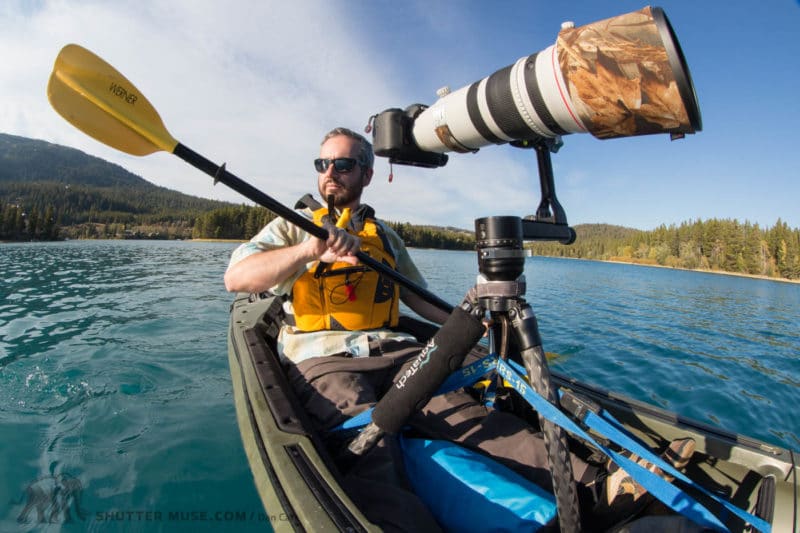
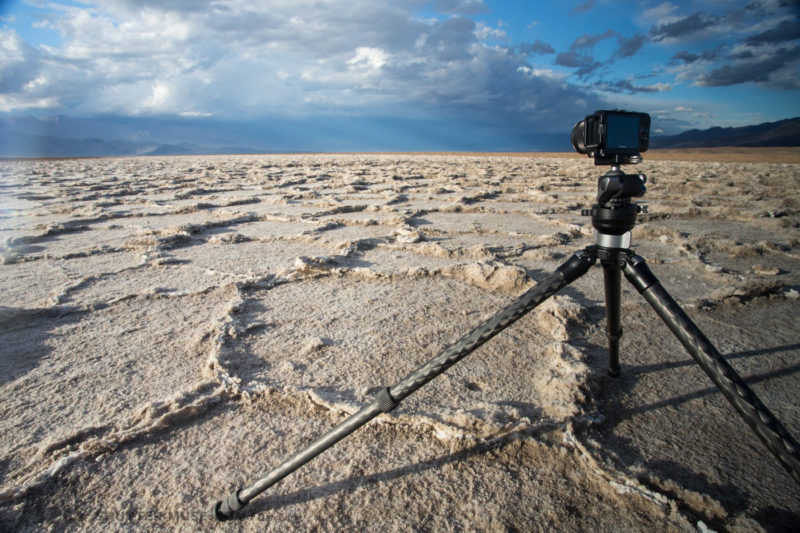
RRS is renowned for its beautiful designs and faultless machining. Everything produced in the factory looks like a work of art, as much as that is possible with a tripod, at least. But RRS products don’t just have a pretty face; they deliver performance to support that.
Some people will hesitate at the price of these tripods, but once you use one, you’ll quickly see that they cost more because they’re worth it. Every joint is buttery smooth, every leg lock is silky, and every piece of machining is perfectly anodized. It’s like the old supercar comparison: A Porsche and a Ford can both get you to the grocery store, but one just feels better and does it with more style.
Table of Contents
Why an RRS Tripod Guide Is Needed
As with anything expensive with so many options, deciding which RRS tripod to choose can be agonizing. Over the years, I have owned RRS Series 1, Series 2, and Series 3 tripods, carbon ones, aluminum ones, ones with center columns and ones without, ones with removable apexes and ones with fixed apexes, Mk1 and Mk2 versions, even ones classed as “Short” versions and ones classed as “Long” versions.
I have paired those tripods with just about every RRS tripod head they have ever made, from the BH-25 to the BH-55, and various versions of their gimbal. Some, like my partner Kait, might call this “a problem.” But I’m just going to call it research, and now you can all benefit from a decade of in-field testing.
Disclaimer: All of my RRS tripods were purchased at full price, just like a regular customer. I have been a contributor to Really Right Stuff’s seasonal magazine, Light and Shadow, and have been a pre-production product tester in the past, but I’m under no obligation to gush nice things about all of their products. They don’t even know I’m writing this guide. My priority here is to help you make the best decision.
RRS Tripod Model Names and Nomenclature Explained

RRS uses a simple alphanumerical system to construct the product names for its wide range of tripods. Once you see the explanation below, you’ll understand the spec sheets and details in this guide much better and instantly appreciate the differences between tripods such as the TVC-34L, TFCX-14, and QVC-44.
- First letter: T for tripod or Q for quadpod.
- Second letter: V for Versa series tripod with interchangeable apex, F for tripods with a fixed apex or Q for tripods with a built-in quick-column.
- Third letter: C for carbon fibre or A for aluminum
- Fourth letter (if there is one): X extra light and extra small, or T for tactical (hunting).
- First number: Indicates tripod series – 1, 2, 3 or 4. This has some correlation with capacity, but also as a way to differentiate top leg diameter, and a way to describe accessories. eg. A Series 3 leveling base is obviously designed to be used on Series 3 tripods.
- Second number: The number of leg sections – 1, 2, 3, 4 or 5.
- Final letter (optional): S for Short, L for Long, G for Ground, or i for Inverted.
- Ascend-14 Series – BH indicates a model that includes a built-in ball head. PL indicates a model that has a ball head platform.
- Example 1: TVC-23 – This is a Series 2 Carbon tripod with a Versa apex and 3 leg sections.
- Example 2: TVC-32G – This is a Series 3 carbon tripod with a Versa apex and 2 leg sections. It is a Ground pod designed for low-level usage.
- Example 3: TFC-24L – This is a Series 2 carbon tripod with a fixed apex and 4 leg sections. The L designation means it’s the Long variation, so all of the leg sections are slightly longer than the regular version of the TFC-24, thus making it taller when extended to maximum height.
- Example 4 – Ascend-14 L BH – This is a Series 1 tripod with 4 leg sections. It’s part of the Ascend series, in the long variation, and it also has a built-in ball head.
- Example 5 – TFCX 14 – This is a Series 1 carbon tripod with 4 leg sections.
Really Right Stuff Tripod Specifications
Now that you understand the tripod’s naming scheme, this table compares the essential specifications of maximum and minimum height, folded length and diameter, and capacity and price. As you study the specs, you’ll notice a few correlations between the tripod designs and the resulting specifications.
For example, fixed-apex TFC versions of tripods are slightly lighter and have a smaller folded diameter than their TVC siblings. More leg sections decrease the folded length of a tripod to make it more packable, but they also slightly reduce the maximum capacity and increase the price. Long and Short variations of tripods have different folded lengths and somewhat different maximum capacities.
Note on pricing: I used to include the current price in the second column of this table, but prices fluctuated so much in recent years that I have given up constantly tweaking them. Please click the link to check the current pricing.
Standard Tripods
| Model | Price | Leg Sections | Max Height | Min Height | Folded Length | Folded Diameter | Weight | Capacity |
|---|---|---|---|---|---|---|---|---|
| TFCX-13 | Check Price | 3 | 41.2 in / 104.6 cm | 3.4 in / 8.6 cm | 18.4 in / 46.7 cm | 3.4 in / 8.6 cm | 2.1 lb / 959 g | 30 lb / 13.6 kg |
| TFCX -14 | Check Price | 4 | 48.4 in / 122.9 cm | 3.3 in / 8.4 cm | 17.3 in / 43.9 cm | 3.4 in / 8.6 cm | 2.3 lb / 1035 g | 30 lb / 13.6 kg |
| TFCX-14L | Check Price | 4 | 57.2 in / 145.3 cm | 3.6 in / 9.1 cm | 19.6 in / 49.8 cm | 3.4 in / 8.6 cm | 2.5 lb / 1131 g | 30 lb / 13.6 kg |
| TFCX-13 + Riser*1 | Check Price | 3 | 48.4 in / 122.9 cm | 8.5 in / 21.6 cm | 23.5 in / 59.7 cm | 3.4 in / 8.6 cm | 2.3 lb / 1049 g | 30 lb / 13.6 kg |
| Ascend-14 BH | Check Price | 4 | 61.3 in / 155.7 cm | 5.1 in / 13.0 cm | 18.6 in / 47.2 cm | 3.4 in / 8.6 cm | 3.2 lb / 1450 g | 30 lb / 13.6 kg |
| Ascend-14 PF | Check Price | 4 | 58.2 in / 147.8 cm | 3.7 in / 9.4 cm | 17.1 in / 43.4 cm | 3.4 in / 8.6 cm | 3.0 lb / 1360 g | 30 lb / 13.6 kg |
| Ascend-14L BH | Check Price | 4 | 68.9 in / 175.0 cm | 5.1 in / 13.0 cm | 21.1 in / 53.6 cm | 3.4 in / 8.6 cm | 3.4 lb / 1534 g | 30 lb / 13.6 kg |
| Ascend-14L PF | Check Price | 4 | 66.6 in / 169.2 cm | 3.7 in / 9.4 cm | 19.6 in / 49.8 cm | 3.4 in / 8.6 cm | 3.2 lb / 1450 g | 30 lb / 13.6 kg |
| TVC-24L MK2 | Check Price | 4 | 66.4 in / 168.7 cm | 4.1 in / 10.4 cm | 23.3 in / 59.2 cm | 4.7 in / 11.9 cm | 3.8 lb / 1741 g | 70 lb / 32 kg |
| TFC-24L MK2 | Check Price | 4 | 66.3 in / 168.4 cm | 3.9 in / 9.9 cm | 23.2 in / 58.9 cm | 3.8 in / 9.7 cm | 3.7 lb / 1674 g | 70 lb / 32 kg |
| TVC-33 MK2 | Check Price | 3 | 58.2 in / 147.8 cm | 4.4 in / 11.2 cm | 25.4 in / 64.5 cm | 5.7 in / 14.5 cm | 4.1 lb / 1860 g | 85 lb / 39 kg |
| TFC-33 MK2 | Check Price | 3 | 58.2 in / 147.8 cm | 4.3 in / 10.9 cm | 25.4 in / 64.5 cm | 4.1 in / 10.4 cm | 3.7 lb / 1687 g | 85 lb / 39 kg |
| TVC-34 MK2 | Check Price | 4 | 58.2 in / 147.8 cm | 3.7 in / 9.4 cm | 20.9 in / 53.1 cm | 5.7 in / 14.5 cm | 4.3 lb / 1928 g | 85 lb / 39 kg |
| TFC-34 MK2 | Check Price | 4 | 58.2 in / 147.8 cm | 3.7 in / 9.4 cm | 20.9 in / 53.1 cm | 4.1 in / 10.4 cm | 3.9 lb / 1746 g | 85 lb / 39 kg |
| TVC-34L MK2 | Check Price | 4 | 68.4 in / 173.7 cm | 4.0 in / 10.2 cm | 23.9 in / 60.7 cm | 5.7 in / 14.5 cm | 4.6 lb / 2063 g | 80 lb / 36 kg |
| TFC-34L MK2 | Check Price | 4 | 68.4 in / 173.7 cm | 4.0 in / 10.2 cm | 23.9 in / 60.7 cm | 4.1 in / 10.4 cm | 4.6 lb / 2068 g | 80 lb / 36 kg |
Tabletop and Ground Tripods
| Model | Price | Leg Sections | Max Height | Min Height | Folded Length | Folded Diameter | Weight | Capacity |
|---|---|---|---|---|---|---|---|---|
| TFA-01 | Check Price | 1 | 4.7 in / 11.9 cm | 1.5 in / 3.8 cm | 5.9 in / 15 cm | 1.3 in / 3.3 cm | 0.3 lb / 136 g | 15 lb / 6.8 kg |
| TVC-32G MK2 | Check Price | 2 | 14.0 in / 35.6 cm | 2.9 in / 7.4 cm | 10.2 in / 26 cm | 5.6 in / 14.2 cm | 3.2 lb / 11451 g | 200 lb / 91 kg |
SOAR Tripods
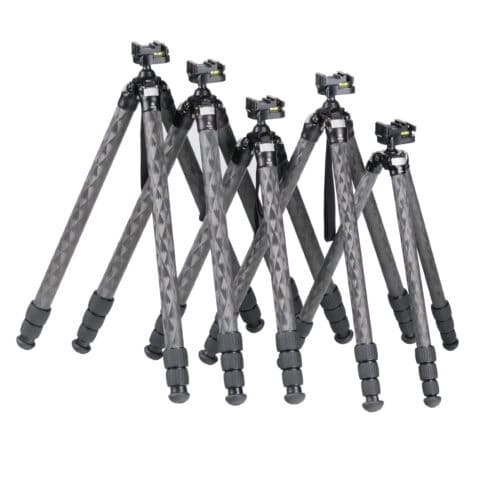
Though I focus on photography on this site, I’m including the RRS SOAR (Sport Optics and Rifles) tripods in the guide for completeness.
| Model | Price | Leg Sections | Max Height | Min Height | Folded Length | Folded Diameter | Weight | Capacity |
|---|---|---|---|---|---|---|---|---|
| TVC-22i Compact | Check Price | 2 | 47.5 in / 120.7 cm | 5.1 in / 13.0 cm | 30.0 in / 76.2 cm | 4.5 in / 11.4 cm | 3.5 lb / 1.6 kg | 80 lb / 36 kg |
| TVC-22i | Check Price | 2 | 64.3 in / 163.3 cm | 5.5 in / 14.0 cm | 38.2 in / 97.0 cm | 5.4 in / 13.7 cm | 4.3 lb / 1.9 kg | 95 lb / 43 kg |
| TVC-43i | Check Price | 3 | 66.3 in / 168.4 cm | 7.3 in / 18.5 cm | 30.5 in / 77.5 cm | Unknown | 5.5 lb / 2.5 kg | 100 lb / 45.4 kg |
| TFCT-14L | Check Price | 4 | 59.4 in / 150.9 cm | 3.8 in / 9.7 cm | 22.0 in / 55.9 cm | 3.8 in / 9.7 cm | 3.5 lb / 1.6 kg | 50 lb / 23 kg |
| TFCT-24L | Check Price | 4 | 68.9 in / 175.0 cm | 6.6 in / 16.8 cm | 25.9 in / 65.8 cm | 3.8 in / 9.7 cm | 4.6 lb / 2.1 kg | 70 lb / 32 kg |
| TFCT-33 | Check Price | 4 | 60.9 in / 154.7 cm | 7.0 in / 17.8 cm | 28.0 in / 71.1 cm | 4.1 in / 10.4 cm | 4.7 lb / 2.1 kg | 85 lb / 39 kg |
| TFCT-34 | Check Price | 4 | 60.9 in / 154.7 cm | 6.4 in / 16.3 cm | 23.6 in / 59.9 cm | 4.1 in / 10.4 cm | 4.8 lb / 2.2 kg | 85 lb / 39 kg |
| TFCT-34L | Check Price | 4 | 71.1 in / 180.6 cm | 6.7 in / 17.0 cm | 26.6 in / 67.6 cm | 4.1 in / 10.4 cm | 5.5 lb / 2.5 kg | 80 lb / 36 kg |
Monopod
I’m including the lone remaining RRS monopod, the MC-34, in this guide. People may be choosing between a lightweight tripod and a monopod.
| Model | Price | Leg Sections | Max Height | Folded Length | Weight | Capacity |
|---|---|---|---|---|---|---|
| MC-34 | Check Price | 4 | 63 in / 160.0 cm | 20.3 in / 51.6 cm | 1.5 lb / 680 g | 50 lbs / 22.7 kg |
Discontinued Tripods
Are you considering an older model on the second-hand market? You may find discontinued model specifications that are applicable. Note that discontinued Mk 1 tripods share the same dimensions and weights as the discontinued Mk 2 tripods.
| Model | Leg Sections | Max Height | Min Height | Folded Length | Folded Diameter | Weight | Capacity |
|---|---|---|---|---|---|---|---|
| TFA-01 Basic | 1 | 5.8 in / 14.7 cm | 1.5 in / 3.8 cm | 5.8 in / 14.7 cm | 1.3 in / 3.3 cm | 0.29 lb / 132 g | 50 lb / 22.7 kg |
| TFC-14 Mk2 | 4 | 47.1 in / 119.6 cm | 2.7 in / 6.9 cm | 17.8 in / 45.2 cm | 3.4 in / 8.6 cm | 2.46 lb / 1116 g | 50 lb / 22.7 kg |
| TQC-14 Mk2 | 4 | 58.1 in / 147.6 cm | 3.4 in / 8.6 cm | 18.3 in / 46.5 cm | 3.9 in / 9.9 cm | 2.78 lb / 1261 g | 50 lb / 22.7 kg |
| TVC-23 Mk2 | 3 | 52.4 in / 133.1 cm | 4.1 in / 10.4 cm | 23.9 in / 60.7 cm | 4.7 in / 11.9 cm | 3.42 lb / 1551 g | 80 lb / 36.3 kg |
| TFC-23 Mk2 | 3 | 51.4 in / 130.6 cm | 4.0 in / 10.2 cm | 23.8 in / 60.5 cm | 3.7 in / 9.4 cm | 3.22 lb / 1461 g | 80 lb / 36.3 kg |
| TFC-24 Mk2 | 4 | 66.3 in / 168.4 cm | 3.9 in / 9.9 cm | 23.2 in / 58.9 cm | 3.8 in / 9.7 cm | 3.69 lb / 1674 g | 70 lb / 32 kg |
| TVC-24 MK2 | 4 | 49.5 in / 125.7 cm | 3.6 in / 9.1 cm | 19.4 in / 49.3 cm | 4.7 in / 11.9 cm | 3.43 lb / 1556 g | 85 lb / 38.6 kg |
| TVC-33S MK2 | 3 | 50.4 in / 128.0 cm | 4.0 in / 10.2 cm | 22.8 in / 57.9 cm | 5.7 in / 14.5 cm | 3.83 lb / 1737 g | 90 lb / 41 kg |
| TFC-33 MK2 | 3 | 50.4 in / 128.0 cm | 4.0 in / 10.2 cm | 22.5 in / 57.2 cm | 4.1 in / 10.4 cm | 3.45 lb / 1565 g | 90 lb / 41 kg |
| TVC-43 MK2 | 3 | 63.6 in / 161.5 cm | 7.6 in / 19.3 cm | 27.6 in / 70.1 cm | 6.9 in / 17.5 cm | 5.99 lb / 2716 g | 100 lb / 45 kg |
| TVC-44 MK2 | 4 | 75.3 in / 191.3 cm | 7.2 in / 18.3 cm | 26.0 in / 66.0 cm | 6.9 in / 17.5 cm | 6.36 lb / 2899 g | 90 lb / 41 kg |
| TVC-45 MK2 | 5 | 85.4 in / 216.9 cm | 6.8 in / 17.3 cm | 25.0 in / 63.5 cm | 6.9 in / 17.5 cm | 6.88 lb / 3121 g kg | 80 lb / 36 kg |
| TVC-42G MK2 | 2 | 16.4 in / 41.7 cm | 4.3 in / 10.9 cm | 11.8 in / 30.0 cm | 6.7 in / 17.0 cm | 5.18 lb / 2350 g | 250 lb / 113 kg |
| TFA-32G | 2 | 17.7 in / 45.0 cm | 1.6 in / 4.1 cm | 12.4 in / 31.5 cm | 2.9 in / 7.4 cm | 2.17 lb / 985 g | 50 lb / 23 kg |
| QVC-44 | 4 | 75.5 in / 191.8 cm | 4.8 in / 12.2 cm | 26.2 in / 66.5 cm | 6.0 in / 15.2 cm | 8.19 lb / 3720 g | 120 lb / 54.43 kg |
Discontinued Monopods
| Model | Leg Sections | Max Height | Folded Length | Weight | Capacity |
|---|---|---|---|---|---|
| MC-14 | 4 | 51.4 in / 130.6 cm | 16.5 in / 41.9 cm | 1.0 lb / 400 g | 25 lb / 11.3 kg |
| MC-25 | 5 | 66.3 in / 168.4 cm | 19.0 in / 48.3 cm | 1.5 lb / 667 g | 40 lb / 18.14 kg |
| MC-45 | 5 | 93.0 in / 236.2 cm | 24.0 in / 61.0 cm | 2.0 lb / 900 g | 50 lb / 23 kg |
RRS Out of Stock – What Are The Alternatives?

Over the last few years, it has become challenging to get an RRS tripod as they are often out of stock. If you find one in stock, don’t consider it too long! If you miss it, you could wait for months before it becomes available again. If you need a tripod ASAP for an upcoming trip, and you can’t find it in stock right now, you should look elsewhere. If that happens, I recommend looking at another made-in-the-USA tripod company, ProMediaGear.
In search of a heavy-duty Series 4 tripod and unable to get the RRS one I wanted, I recently had to make this decision myself. PMG’s tripods are equally good as RRS tripods, and they don’t seem to suffer the same supply issues. While I would have liked to add to my RRS tripod collection, I have been mightily impressed with the ProMediaGear TR424L tripod, just as I have been in the past with their tripod heads.
Choosing an RRS Tripod

Tripod choice is very personal and depends on factors such as your height, the weight of your camera, how you intend to use or travel with it, and what accessories you’d like to add to your support package. The design of the different tripod models influences all of these critical specifications, and the central design choices for Really Right Stuff photographic tripods are as follows:
- TVC, TFC, or TFCX
- Tripod series: 1, 2, 3 or 4
- Height variation: S, L or G
- Number of leg sections
- Mk1 or Mk2 tripod
In the following sections, I’ll discuss each of these options, and then we will examine some specific model recommendations.
TFC Vs. TVC Tripods

With one exception, every Series 2 and Series 3 tripod is currently available in two variations: TFC (Ultralight) and TVC (Versa). The exception is the ultra-short TVC-32G Ground Pod, which lacks a TFC version. Series 1 tripods do not offer this choice.
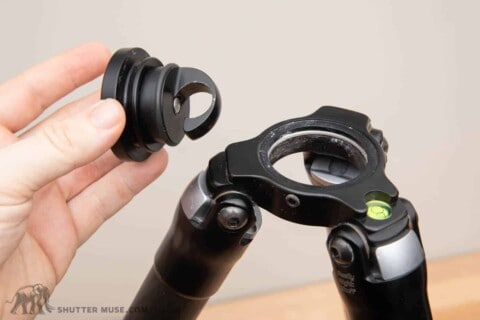
To understand the difference between a TFC and a TVC tripod, you need to know that in the Really Right Stuff tripod terminology, the apex is the part where all three legs meet at the top. Some might call this the top plate, but RRS refers to it as the apex. TFC tripods have a fixed apex, while TVC tripods use a removable Versa apex that includes a standard flat plate with a 3/8″-16 stud but also supports a variety of Versa accessories, such as leveling bases, video bowls, and center columns. Let’s discuss the advantages and disadvantages of each version.
TVC to TFC Conversion
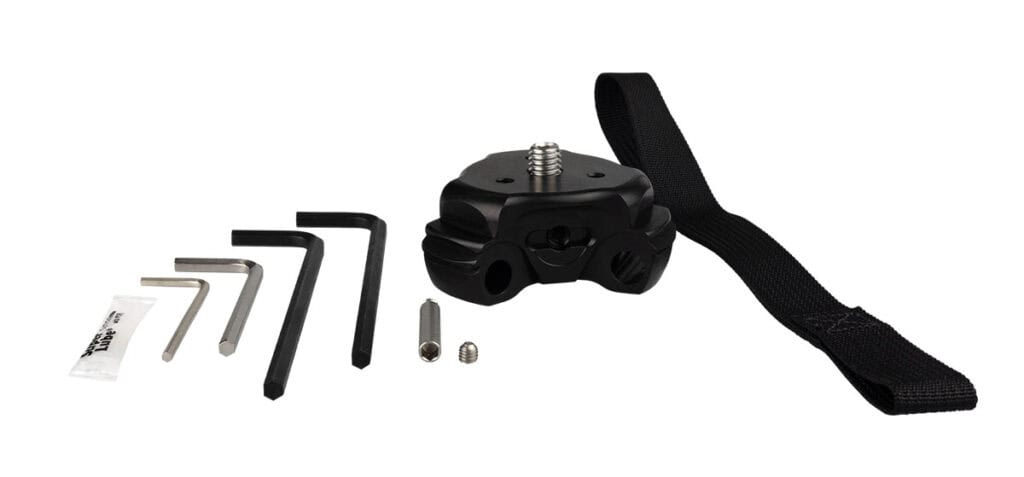
RRS offers a conversion kit to turn a TVC tripod into a TFC tripod. The kit costs just over $100, which should help ease some people’s worries about choosing the wrong model. If you’re unsure which one is right for you, the best option is to buy the TVC version, knowing you can always convert it to a TFC tripod later using the kit. Since the fixed apex is the same size for both Series 2 and Series 3 tripods, only one conversion kit is offered. This also means that if you own both a Series 2 and Series 3 tripod, you can buy one conversion kit and move that fixed apex between your tripods as needed. The conversion operation requires no special skills and takes about five minutes.
TVC to TFC Conversion
Rather than calling RRS and asking the question themselves, one particularly lazy and obnoxious commenter tried to imply that my information about converting one type of RRS tripod to another was incorrect simply because they couldn’t find anyone else mentioning it. So, let me be clear: TVC tripods can be converted to TFC tripods using the dedicated conversion kit that RRS sells on its website in the Tripod Accessories section.
You can also convert a TFC tripod to a TVC tripod. However, the kit to achieve this conversion (TFC->TVC) is not listed on the RRS website. Instead, you need to ask RRS to create a custom order for the parts to do this. Note that it is much more expensive than converting from TVC to TFC because the TVC apex is much larger than a TFC apex and requires machining from a larger billet. Plus, the parts order must include a Versa plate and a hook. In short, it’s possible to convert tripods this way (TFC->TVC), but you may be better off selling your TFC tripod on the secondhand market and buying a brand-new TVC instead.
TFC Tripods – Pros and Cons

A TFC tripod features a fixed apex. All legs connect to a machined aluminum section with a removable stud for attaching your tripod head. On TFC tripods, this stud is reversible and removable–a feature RRS oddly does not mention on its website. This allows you to use either a 1/4″20 stud or a 3/8″16 stud on top of the tripod. You can also remove it completely to leave a 1/4″20 threaded hole, which can be used with the BC-18 Microball or the BPC-16 Panning Microball.


All TFC tripods come with a hand strap that hangs below the apex. This strap can be used to apply downward pressure while shooting, increasing tripod stability in windy conditions. TFC tripods are slightly lighter than their TVC counterparts (see specifications table for exact values), and their folded diameter is smaller, making them easier to pack into a suitcase, Pelican photography case, or duffel bag for travel.
While you cannot add a Series 3 RRS leveling head to a TFC tripod because it lacks the removable apex plate, you can install an RRS Universal leveling head, which screws onto the TFC tripod’s 3/8″16 stud. This option doesn’t look quite as neat as the integrated Series 3 head, but has the advantage of maintaining the TFC tripod’s smaller packed diameter and can be easily removed if you want to lighten your tripod on the fly. It’s not possible to install the optional Series 3 or Series 2 center columns on TFC versions.
One other downside I’ve noticed after many years of using TFC tripods is that they are a bit harder to carry by hand compared to TVC versions of the same tripod. When the legs are collapsed, there’s no space to grip one leg of the tripod. On a TVC tripod, the gap near the apex allows your fingers to wrap around one of the legs.
TVC Tripods – Pros and Cons


A TVC tripod features a removable Versa SureGrip™ apex. The standard Versa platform included with all TVC tripods has a fixed 3/8″16 stud. Using a hex key, you can remove this platform and replace it with a Versa leveling base or a Versa Quick Column. TVC tripods also come with a removable aluminum hook on the underside of the Versa platform. These tripods are slightly heavier than their TFC counterparts, and the wider apex results in a larger minimum diameter and a somewhat bulkier kit to pack into your bag.
RRS Versa Accessories
Always buy directly from RRS when you can. Their service is fantastic!
- Series 2 Versa Leveling Base – Really Right Stuff / B&H Photo
- Series 2 Versa Center Column – Really Right Stuff / B&H Photo
- Series 3 Versa Leveling Base – Really Right Stuff / B&H Photo
- Series 3 Versa Center Column – Really Right Stuff / B&H Photo
- Series 4 Versa Video Bowl – Really Right Stuff / B&H Photo

Which One Is Right for You?

If you are sure you do not need to use any of the Versa accessories, there is no point in buying the TVC version of the tripod. You might as well go for the TFC version and save some weight and space. The decision doesn’t have to be any harder than that, but if you need more convincing, RRS has a handy video to watch below. As mentioned earlier, if you are still unsure, the safest bet is to buy the TVC version, since you can always buy the conversion kit to change a TVC into a TFC at a later date.
RRS Tripod Series Number Explained

RRS tripods are divided into three series: Series 1, Series 2, and Series 3 (Series 4 tripods have been discontinued). The lower the series number, the smaller the uppermost leg diameter, which affects the maximum capacity. Thinner legs mean a lower maximum capacity. Series 1 tripods are the smallest and lightest, with capacities up to 30 lbs, while Series 4 tripods are the largest and heaviest, supporting up to 85 lbs in the case of the TVC-33 and TVC-34.
While the series number is a helpful starting point for understanding an RRS tripod’s capacity, it isn’t the only factor that influences this important specification. Tripod capacity is also impacted by maximum height (a taller tripod generally has a lower capacity).
Number of Leg Sections
RRS tripods have 1, 2, 3, or 4 leg sections. Adding more leg sections lets you shorten the tripod’s collapsed length while keeping a similar maximum height. However, it slightly reduces stability because the more leg sections you have, the smaller the diameter of the lowest leg section becomes.
Take the TVC-33 and TVC-34 as examples. The latter has four leg sections, so its collapsed length is shorter (20.9″ vs 25.4″), making it a bit easier to pack for travel. However, it is also slightly shorter in maximum height, and because of the thinner lower leg, there’s a higher risk that strong winds or heavy loads could cause instability.
Size Variations
As we know from the nomenclature section, some RRS tripods are labeled with size variations such as L, S, or G for Long, Short, or Ground.
- G – Ground Pods – For eye-level wildlife photography and filmmaking
- L – Large – For taller photographers or those that shoot on uneven terrain
- S – Short – For shorter photographers or those who value weight as a priority (now discontinued)
A common mistake I see landscape and wildlife photographers make is buying a tripod that’s too short for them. Too often, people consider their height and purchase a tripod that, at its maximum height, holds the camera near their face. If they were just using a $50 tripod that lasts a few months, it wouldn’t be such a big deal. But since this guide covers tripods costing over $1000, I assume you’re making a long-term investment. In this case, it’s important to get this right.
The problem is that the ground is rarely flat when you’re out in the field. Once one tripod leg needs to be longer than the others, the maximum tripod height that would have aligned your camera near your face now only reaches chest level. Sometimes, you might manage to look down on a flip-out LCD screen on a dark morning to compose a shot, but soon enough, you’ll be shooting in bright sunlight, wishing you could put your eye to the viewfinder. Spending hours hunched over isn’t worth the small weight savings of choosing a slightly shorter tripod. Trust me.
I’m only 5’9″, but I opt for the L version of every RRS tripod that offers it: Ascend-14L, TFCX-14L, TVC-24L, and TVC-34L. Each year, I encounter situations that require extra height, and sometimes it makes a difference in my photography by providing a unique angle or revealing a background that others can’t capture.
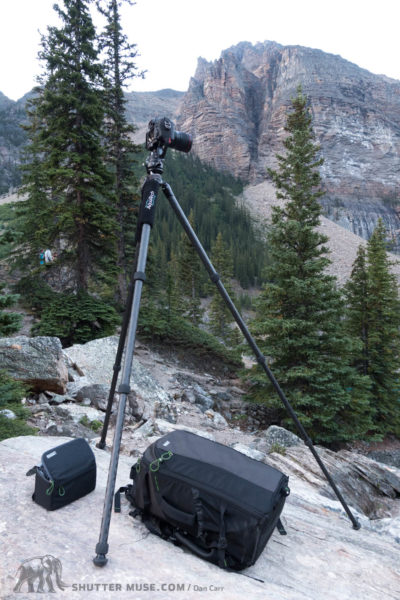
If you mainly work in a studio or buildings for architectural photography, having extra height may not be necessary. But if you’re a landscape or wildlife photographer often working on uneven ground, consider buying a tripod that will raise your camera at least 6-8 inches above your eye level. That way, when you’re in the field and need to extend a downhill leg, as I did in the photo above, you’ll still be able to get that camera back to your eye level.
Mk1 Vs. Mk2 RRS Tripods

In 2019, RRS began selling Mk2 versions of all its tripods. I will briefly compare the two versions because many Mk1 tripods are available on the second-hand market, and Mk1 owners might be wondering whether to upgrade to an Mk2.
The main upgrade in the Mk2 version is the leg locks. The only visual difference indicating that a tripod is part of the new Mk2 lineup is the slightly different appearance of the new leg locks. According to RRS, “The new sealed twist-lock minimizes the number of contaminants, such as sand and grit, that gets caught inside the twist locks. In addition to improving the feel and operation of the twist locks, the seals extend their life. This new feature is also important in sub-freezing environments, preventing moisture from entering the assembly and freezing.”
RRS also states, “Mark 2 tripods use a 360-degree collet and wiper shield that can be easily removed from the twist locks for cleaning. If you need to clean the twist-locks in the field, the process is now much easier. Gone are the days of hard-to-remove and reinstall split gibs; maintenance is now simple!”
And finally, “We designed a discreet air vent to port air out just under our pull-tabs towards the center of the tripod. These air vents prevent pressure gradients from building up, allowing smoother leg extraction and collapse. The inward-facing vents also ensure airflow is directed toward the center of the tripod and away from mounted lens elements. Positioned at the top and inside of each leg, the air vents are also less likely to let water or other debris enter the leg assembly.”
Although these are welcome improvements, I believe there’s no need for anyone to upgrade their Mk1 tripod to an Mk2 to get the new leg locks. I also think that if you find a good deal on a second-hand Mk1 tripod, go ahead and buy it confidently! It’s still a great tripod. I have owned both types of tripods and don’t notice a huge difference.
Tripod Models Discussed
RRS Series 1 Tripods
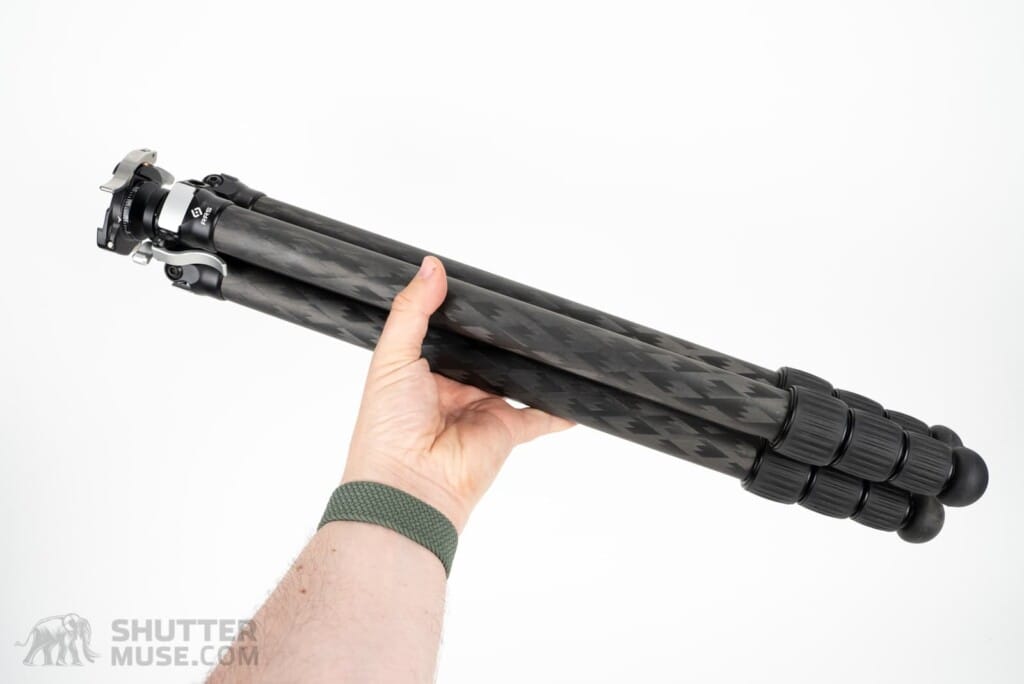
The Series 1 tripod range has undergone more changes than any other part of the RRS tripod catalog over the past fifteen years. Gone are the old TFC-14 and TQC-14 models, both MK1 and MK2. Now we have the Ascend 14, which has four variations, along with the TFCX-14, TFCX-14L, and the TFCX-13, an ultra-compact model for those who prefer significant weight savings over maximum height.
The Ascend-14 Series
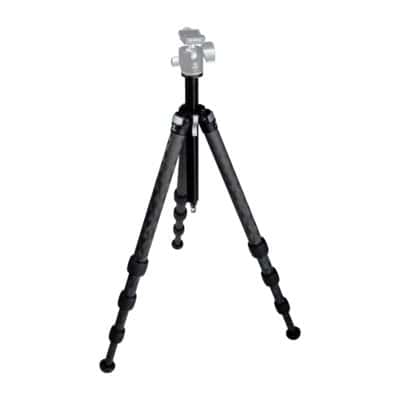

The Ascend-14 Series is Really Rights Stuff’s answer to the all-purpose ultralight tripod. Although the folded diameter of the Ascend tripod is the same as that of the RRS TFCX tripods, the Ascend-14 manages to fit a quick column between the folded legs using a clever scalloped design. This lever-locked column can be inverted for ground-level shooting or shortened to save some weight. The Ascend-14 tripod is available in four different versions: Ascend-14 BH, Ascend-14 PL, Ascend-14L BH, and Ascend-14L PL.
Check Prices of the Series 1 Ascend Tripods:
Always buy directly from RRS when you can.
- RRS Ascend 14 PF – Really Right Stuff / B&H Photo
- RRS Ascend 14L PF – Really Right Stuff / B&H Photo
- RRS Ascend 14 BH – Really Right Stuff / B&H Photo
- RRS Ascend 14L BH – Really Right Stuff / B&H Photo
The BH versions of the tripod feature a built-in ball head. With its inverted design, this head resembles the RRS BPC-16 Microball. The PL versions of the tripod have a standard platform with a 3/8″16 stud. The platform on the PL versions is sized to perfectly match the RRS BH-30 ball head. The L versions of the Ascend-14 are taller (66.6″ vs. 58.2″) and have a longer folded length (19.6″ vs. 17.1″) than the non-L versions.
The Quick Column on all Ascend tripods adds 10.1″ (26cm) to the tripod’s height. The Max Height measurements in the tripod specifications table include the column height. If you want to know how tall the Ascend tripods can go without raising the Quick Column, you’ll have to subtract 10.1″ from the specified max height. This means the Ascend-14L, with its Quick Column lowered, is only 2 inches shorter than the regular Ascend-14 with its column raised. If you avoid using tripod center columns, the L version of the Ascend-14 is the one for you—and the one I chose.


TFCX-13 – A Bit of an Odball


The RRS TFCX-13 is a 3-section Series 1 tripod with a very short maximum height of 41.19″ (104.62 cm). This compromise in height results in a weight of just 2 lb (965 g). An optional 7″ riser can be screwed to the tripod’s Apex, but do note that this is not a center column. It cannot be retracted between the tripod’s legs. Thus, when attached, it adds to the folded length unless you detach it.
Check Prices of the TFCX-13 Tripod:
- RRS TFCX 13 – Really Right Stuff
- RRS 7″ Riser for TFCX – Really Right Stuff / B&H Photo
The TFCX-13 is a niche tripod that might appeal to ounce-counting hikers or those planning to stay behind their tripod all day in a photo blind. Just avoid using this as your only tripod. It would be the wrong choice for 99.9% of readers of this guide. Judging by how this tripod was marketed—primarily through hunting websites—it seems to have been designed mainly for the RRS SOAR catalog.
TFCX-14 and TFCX-14L
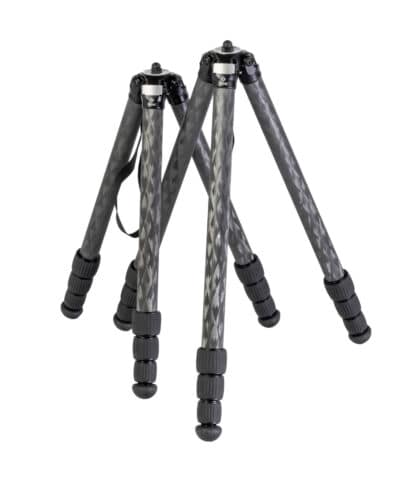
A year after introducing the extra-short TFCX-13, RRS added the TFCX-14 and TFCX-14L tripods to their catalog. These tripods use the same leg sections as the Ascend 14 and 14L, so you can think of them as Ascend 14 tripods without the center column mechanism or the option for an integrated Microball, which saves weight (about 0.7 lbs) and money.
Check Prices of the TFCX-14 Tripods:
- RRS TFCX-14 – Really Right Stuff
- RRS TFCX-14L – Really Right Stuff
The TFCX-14 effectively replaces the long-discontinued TFC-14. The original TFC-14 had a maximum height of 47.1 inches, while the new TFCX-14 offers a maximum height of 48.38 inches. The old TFC-14 had a folded length of 17.8 inches, whereas the newer TFCX-14 is slightly shorter at 17.25 inches and also weighs 0.2 pounds less. The addition of an L variant, in the form of the TFCX-14L, is appreciated.
What I find confusing is RRS’s use of the TFCX name on these two newer Series 1 tripods. When the eXtra-short TFCX-13 was introduced, adding an X to the name made some sense so that this tripod could be singled out as a special-purpose product that didn’t reach the heights usually expected of a tripod. However, it makes no sense, at least to me, to apply the X to the product names of the TFCX-14 and 14L. These are very welcome tripods (back) in the RRS lineup, but the TFCX name might confuse people who are expecting to find something eXtra compared to any of the other fixed-apex TFC tripods.
Converting Ascend 14 to TFCX-14 or Vice Versa
Notably, since the TFCX-14 and 14L share the same legs as the Ascend 14 and 14L, you can place a special parts order with RRS customer service to obtain the parts needed to convert one tripod type to the other. You will not (yet) find a specific conversion kit listed on their site for this, but I have been told that it is possible.
RRS Series 2 Tripods

The Series 2 tripods are the true all-rounders of the RRS tripod lineup. They are lightweight and small enough for extensive travel while maintaining a large enough capacity (85 lb) for just about any lens and camera. My top pick from the Series 2 lineup is the TFC-24L. If I could only have one RRS tripod, this would be it! It offers a huge maximum height in a compact package, with enough capacity to hold a gimbal and a 600mm lens.
Check Prices of the Series 2 Tripods:
- RRS TVC-24 – Really Right Stuff / B&H Photo
- RRS TVC-24L – Really Right Stuff / B&H Photo
- RRS TFC-24 – Really Right Stuff / B&H Photo
- RRS TFC-24L – Really Right Stuff / B&H Photo
Series 2 tripods are designed to pair perfectly with the BH-40 ball head, though there are no hard-and-fast rules here. Those opting for a lighter TFC Series 2 tripod (TFC-24 or TFC-24L) should also consider the smaller BH-30 ball head or, if you are willing to go off-brand, an Acratech GXP. I often pair a GXP with my TFC-24L.

RRS Series 3 Tripods
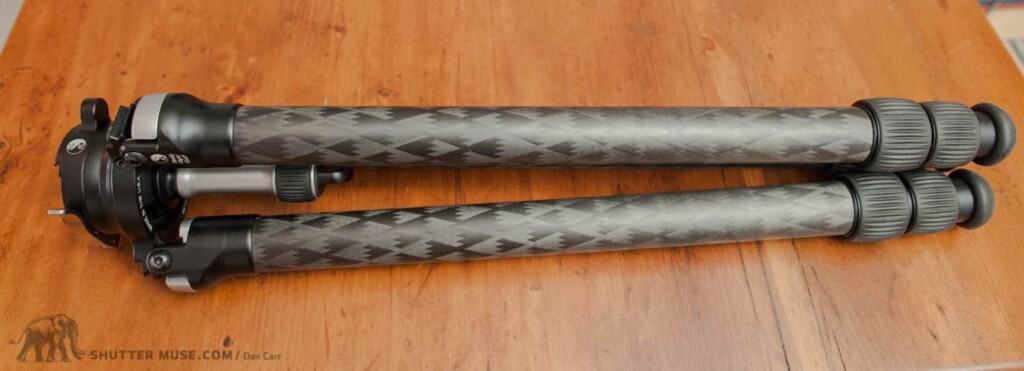
The Series 3 tripods offer the stability recommended for long-term usage of super-telephoto lenses and the damping necessary for critical sharpness with high-megapixel medium-format cameras. The higher your camera’s resolution, the easier it is for micro-vibrations to show up in your images as a lack of sharpness.
While many people fixate on tripod weight capacity, they often forget to factor in their cameras’ resolution. I use my current Series 3 model, a TVC-34L, with big lenses like my Sony 600mm f/4 GM or Nikon 800mm PF for wildlife expeditions and landscape work with my higher-resolution Sony a7R or a1 series cameras.
Check Prices of the Series 3 Tripods:
- RRS TVC-33 – Really Right Stuff / B&H Photo
- RRS TFC-33 – Really Right Stuff / B&H Photo
- RRS TVC-34 – Really Right Stuff / B&H Photo
- RRS TFC-34 – Really Right Stuff / B&H Photo
- RRS TVC-34L – Really Right Stuff / B&H Photo
- RRS TFC-34L – Really Right Stuff / B&H Photo
Series 3 tripods are designed to be paired with the BH-55 ball head or the PG-02 Mk2 gimbal head. If you choose the TFC version of a Series 3 tripod (TFC-33, TFC-34, or TFC-34L) to save some bulk and weight, consider pairing it with a BH-40 ball head instead.
RRS Series 4 Support
Series 4 Tripods
For some reason, RRS has discontinued all of their 3-legged Series 4 tripods. Though I’m sure they sold fewer of these than the 1, 2, or Series 3 tripods, the move still surprises me because these were highly regarded. If you want a tripod with a higher capacity than the Series 3 RRS tripods and options for a 100mm video head, look at the excellent ProMediaGear 4-Series tripods. PMG tripods are every bit as good as RRS tripods, and I now own their TR424L tripod myself when I was unable to acquire an RRS Series 4 tripod.
Series 4 Quadpod

Looking for high-capacity RRS support for your camera? Check out the (now discontinued) QVC-44 Quadpod. It supports 120 lb, extends to 75.5″, and weighs 8.19 lb (3.72 kg). Uses a 75mm Versa Apex, compatible with RRS Series 3 tripod accessories. RRS says it was designed for a natural history filmmaking unit to support a large camera slider with a single central support instead of two.
RRS Ground Pod

Like other sections of its catalog, Really Right Stuff’s selection of Ground Pods has been greatly simplified. We used to have a TVC-32G, TVC-42G, and TFA-32G. The Series 4 Ground Pod was discontinued along with the other Series 4 tripods, and the Aluminum TFA-32G was recently phased out due to rising base material costs cutting into margins. This leaves us with the very capable TVC-32G.
While I could have categorized this under the Series 3 subheading, the TVC-32G’s significantly shorter height and impressive 200-lb capacity deserved more attention. With a maximum height of 14″ and a minimum of just 2.9″, this tripod is designed for wildlife photographers and filmmakers who need reliable support for heavy camera setups while capturing eye-level shots. Sometimes, that means flattening the tripod and lying on the ground. In other situations, it might involve using the tripod at its full height while kneeling behind it or sitting on a small stool in a hide.
You might think you can shoot from both positions using a larger tripod by adjusting the leg angles, but this is only partly true. If you flatten a larger tripod to shoot from ground level, the longer legs make it much harder to move the tripod around as you crawl across the ground toward your subject. To shoot at a 14″ height with a larger tripod would require spreading the lens out wide using the adjustable leg locks. When you do this, it greatly affects the tripod’s stability. The TVC-32G, however, has more than twice the capacity of any other Series 3 tripod at these lower heights, and it takes up much less space in a hide.
RRS TFA-01 Pocket Pod

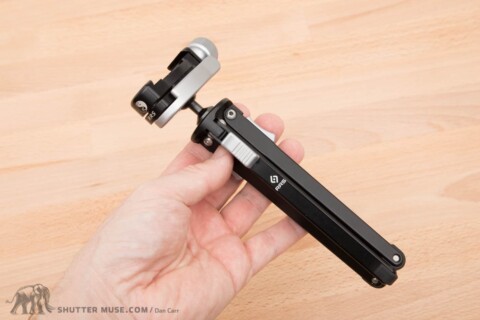
The RRS tabletop tripod is called the TFA-01 Pocket Pod. It features ratcheting leg stops, like a full-sized tripod, allowing you to lock the legs in three positions. Once locked, it is rock-solid. Pair this tiny tripod with the fantastic RRS BC-18 Microball, and, believe it or not, you have a pocketable support capable of holding a super-telephoto lens. These tripods are handy when visiting “no tripod” tourist areas. Keep this in your pocket, and you’ll always have a stable platform on a flat surface or to brace against a wall.
RRS SOAR TFCT Tripods
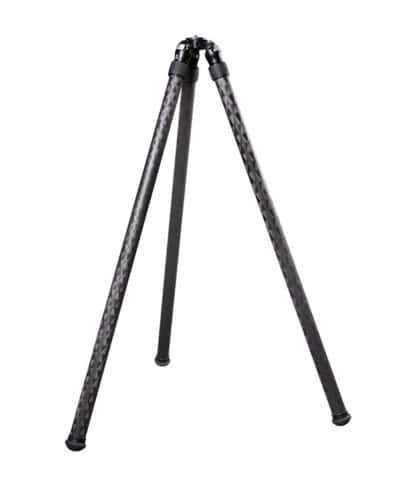
Really Right Stuff doesn’t just make tripods for photographers; they also offer a range of tripods and heads under the RRS SOAR (Sport Optics and Rifles) brand. Most of the tripods in the SOAR lineup are identical to their photographic counterparts, though they feature a dedicated apex that supports the SOAR-specific head, the RRS Anvil 30. However, there are a few exceptions in the TVC-22i, TVC-22i Compact, and TVC-43i models. These tripods feature inverted leg sections. The lower leg section is thicker than the upper one, whereas in a regular tripod, the lowest leg section is the thinnest.
The main benefits of this tripod are for competition rifle sports. It has only a single leg lock on each leg, and the inverted design means the locks are at the top when closed, making it quick and easy to grab when you need to deploy the legs rapidly during rifle contests. Another advantage is that when the legs are extended, the single-leg lock is positioned in the middle of the legs, so there’s never a lock down low in the mud. In short, these are specialized items and not designed for photographers.
RRS Tripod Accessories
In this section, we will look at the various accessories that Really Right Stuff offers for its tripods.
Interchangeable Tripod Feet
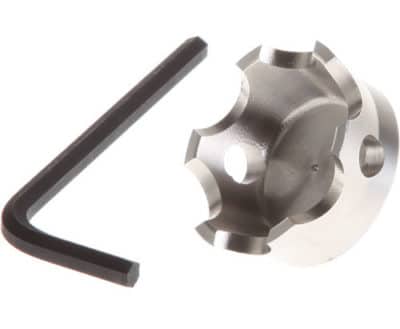
Two types of accessory tripod feet are available: Spikes and Rock Claws. I chose to go with the spikes because they are more suitable for the sandy, snowy, or, to some extent, muddy landscapes I tend to shoot in. The Rock Claws are definitely a more specialized accessory. As the name suggests, they provide a little more grip on rock, but in my experience, the standard rubber feet actually provide a very good grip on rock anyway.


Quick Column
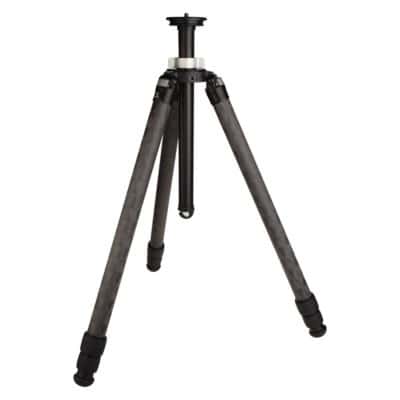
Optional center columns are available for Series 2 and Series 3 tripods. You need a TVC-model tripod to use one. A center column has two purposes: First, it allows you to add additional height to a tripod while keeping the folded length smaller than simply buying the taller version. Second, it allows you to quickly adjust the height of your camera without altering all three legs.
I would not recommend buying one of these columns if you plan to use it constantly. The aluminum center column adds weight to your nice carbon tripod and instability, particularly in windy conditions. Buy the tripod size you need for your height, and only consider the optional column for particular uses such as indoor products and portrait photography, where the speed of height adjustment is useful and the negatives of a center column are less apparent.
RRS Tripod Bags – Discontinued

It has come to my attention that, in 2026, all five sizes of RRS’s tripod bags are no longer available on the RRS website and are listed as discontinued elsewhere. That’s a shame. To avoid this guide being unnecessarily long, I have removed most of the additional info about these bags since it’s no longer relevant. For the time being, I’ll leave the specification table below, just in case someone finds a bag on the second-hand market. They were nice bags.
| Tripod Bag Size | Recommended Tripods/Monopods | Length | Internal Dimension | Weight |
|---|---|---|---|---|
| Compact | TQC-14, TFC-14, TFA-32G, MC-14, TFCX-13, MC-25(no head) | 21″(53.5cm) | 4.3×19″(11.0x47cm) | 13.2oz (375g) |
| Small | TVC-24, TFC-24, MC-34, MC45, MC-25(with head) | 26.5″(67cm) | 4.3×25″(11×63.5cm) | 16.4oz (465g) |
| Medium | TVC-23, TFC-23, TFC-24L, TVC-24L | 31.5″(80cm) | 4.7×28″(12x72cm) | 20.5oz (580g) |
| Large | All Series 3 tripods | 35″(89cm) | 4.7×31.5″(12x80cm) | 23.3oz (660g) |
| Extra Large | All Series 4 tripods | 38.5″(98cm) | 7.8×35″(20x89cm) | 32.1oz (910g) |
RRS Tripod Strap System (QD)

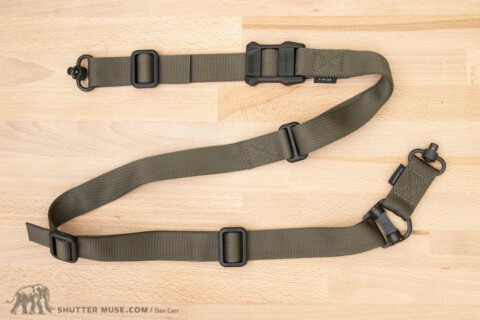
RRS has been integrating a quick-release standard into their camera and lens plates called the QD (Quick Detach) system for a while. This system is borrowed from the firearms industry, where it turns out people like quickly detaching guns from straps just as much as photographers like detaching straps from cameras. Who knew?! The system is catching on in the photo world. Really Right Stuff doesn’t make its own straps, but it resells the straps made by firearms manufacturer Magpul. (see my review).


To use these quick-release straps with an RRS tripod, you need to purchase two items: A QD Apex mount and a QD tripod collar. Both the collar and mount feature a QD-compatible connection. With both parts installed, you can use any strap with QD connectors on both ends to create a 2-point tripod harness.

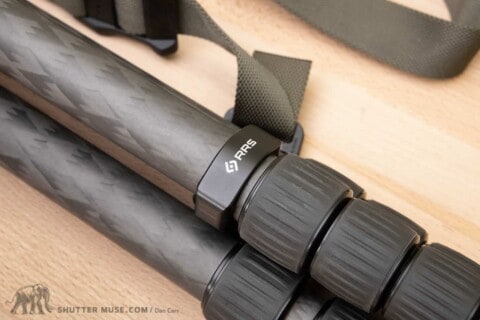
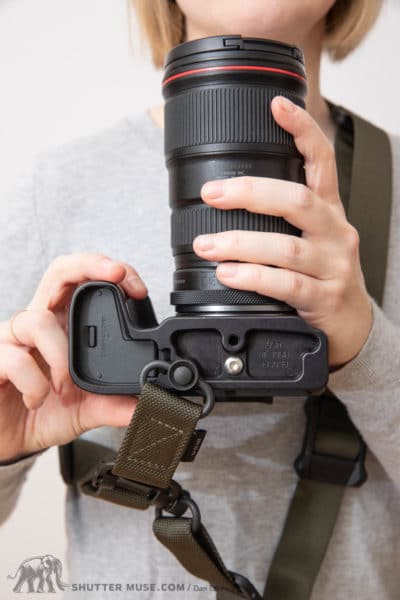
Using the same QD strap with your camera
What’s great about the Magpul straps is that they can be converted from 2-point to single-point attachment. This means you can buy one strap for your tripod and use that same strap as a single-point attachment on your camera. If I’m carrying my tripod over my shoulder with the strap, my camera is always in a bag and, therefore, doesn’t need the strap at the same time.

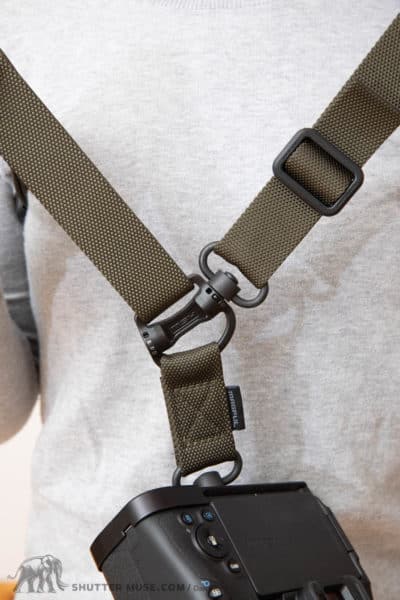
If you have a spare camera strap that you already love, you can also buy a pair of QD swivel adapters from B&H, RRS, or Amazon and put them on your existing strap to convert it for use with the RRS tripod strap set. I’d bet any photographer has at least one spare strap lying around, so this might be a good option for those who cleaned out their bank account buying their dream tripod 🙂
Leveling Base

A leveling base, also known as a leveling head, is a tripod accessory that helps you quickly level the tripod’s top platform without making tiny adjustments to each leg. Position the legs roughly in the right place, then loosen the leveling head and use its built-in bubble level to create a perfectly level platform. This is important for shooting stitched panoramic images to keep the horizon level, and it’s also vital for video shooting to ensure panning motions stay level and don’t drift upward or downward.
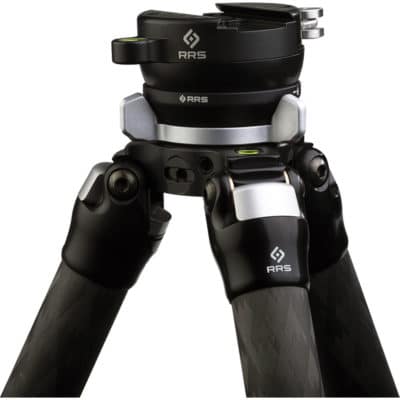
RRS makes two leveling bases. The first is the TA-3, designed to fit the Series 3 Versa tripods. The second is the TA-2U Universal Leveling Base, designed to fit into the Versa apex of Series 2 TVC tripod or to be screwed onto any 3/8″16 stud. Both the RRS leveling bases have the option to be fitted with either a flat plate and a 3/8″ stud, or an Arca-Swiss lever-release clamp for quick-release of your various tripod heads.

Video Bowl
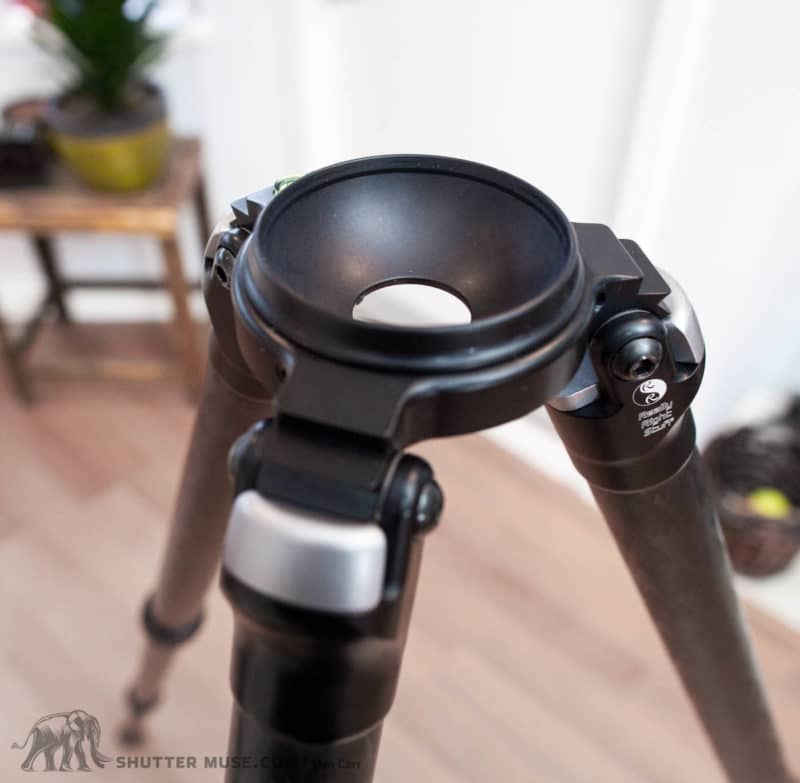
A 75mm video bowl is available for all Series 3 TVC tripods. If you plan to shoot a video with your tripod and own a fluid head with a 75mm bowl, you must buy this accessory. Note that the Series 3 Leveling Base comes with a video bowl, so if you are planning to buy a leveling head, you won’t need to purchase the video bowl.
Where to Buy
Really Right Stuff is an American company and fine folks to deal with directly from their own online store if you can. B&H Photo also stocks most of its products and may offer cheaper shipping options for people living outside the US. I’m in Canada, and B&H will ship any of these items to me for free and also let me pre-pay all taxes and duties. The same can be said for many other international destinations.
If you decide to buy any RRS gear after reading this guide, I’d be grateful if you click the links on this page. I may earn a small commission when you do this, which allows me to dedicate so much time and effort to creating useful resources like this one. Here are all the links for your convenience:
Tripods and Monopods
- Series 1
- RRS TFCX-13 – Really Right Stuff
- RRS TFCX-14 – Really Right Stuff
- RRS TFCX-14L – Really Right Stuff
- RRS Ascend 14 BH – RRS / B&H Photo / Adorama
- RRS Ascend 14L BH – RRS / B&H Photo / Amazon / Adorama
- RRS Ascend 14 PF – RRS / B&H Photo / Amazon / Adorama
- RRS Ascend 14L PF – RRS / B&H Photo / Amazon / Adorama
- Series 2
- Series 3
- RRS TVC-33 MK2 – RRS / B&H Photo / Amazon / Adorama
- RRS TFC-33 MK2 – RRS / B&H Photo / Amazon / Adorama
- RRS TVC-34 MK2 – RRS / B&H Photo / Amazon / Adorama
- RRS TFC-34 MK2 – RRS / B&H Photo / Amazon / Adorama
- RRS TVC-34L MK2 – RRS / B&H Photo / Amazon / Adorama
- RRS TFC-34L MK2 – RRS / B&H Photo / Amazon / Adorama
- Ground or Pocket Pods
- Monopods
Tripod Accessories
- RRS 7″ Riser for TFCX – Really Right Stuff / B&H Photo
- RRS Universal TA-2U Leveling Base – RRS / B&H Photo
- RRS Series 2 TA-2-QC Quick Column – RRS / B&H Photo / Amazon / Adorama
- RRS Series 3 TA-3 Leveling Base – RRS / B&H Photo / Amazon / Adorama
- RRS Series 3 TA-3-QC Quick Column – RRS / B&H Photo / Amazon / Adorama
- RRS Series 3 TA-3-VB Video Bowl – RRS / B&H Photo
- RRS Series 4 TA-4-VB Video Bowl – RRS / B&H Photo
Part 2: RRS Ball Heads and Gimbals
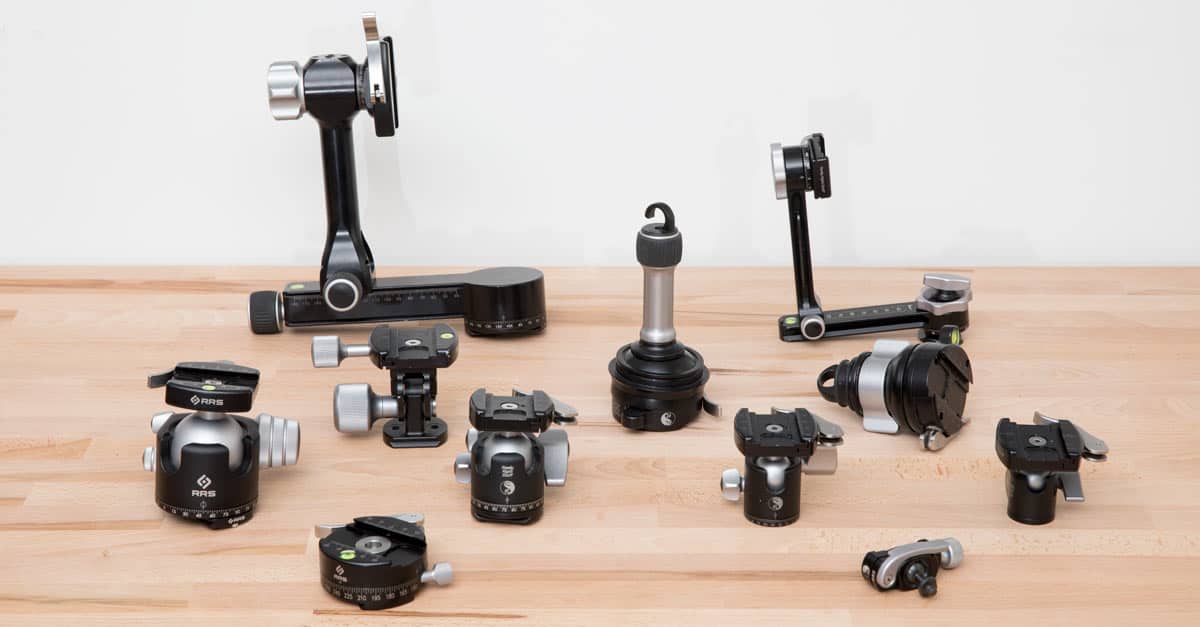
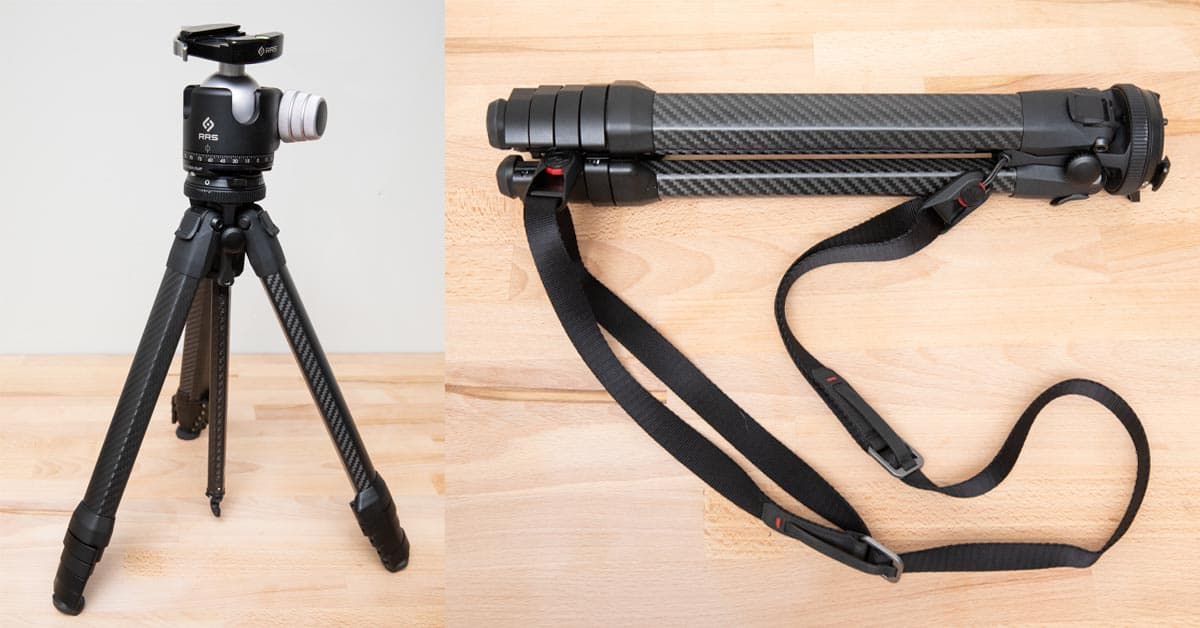
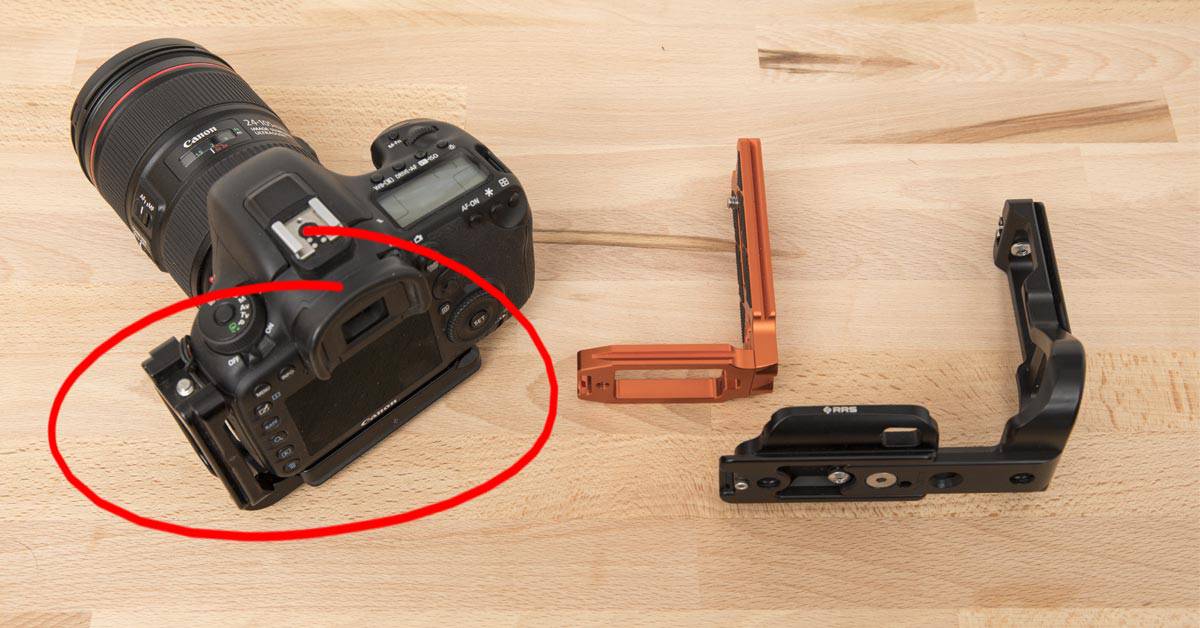
Of course, Really Right Stuff is also known for its incredible range of ball heads, gimbals, and other camera leveling devices. In fact, they have been making these for far longer than they have tripods. While pairing an RRS tripod with an RRS head is not a prerequisite, it is understandably the choice many people make. Not just out of brand loyalty but also because the size of RRS heads perfectly matches the apex diameters of the RRS tripods.
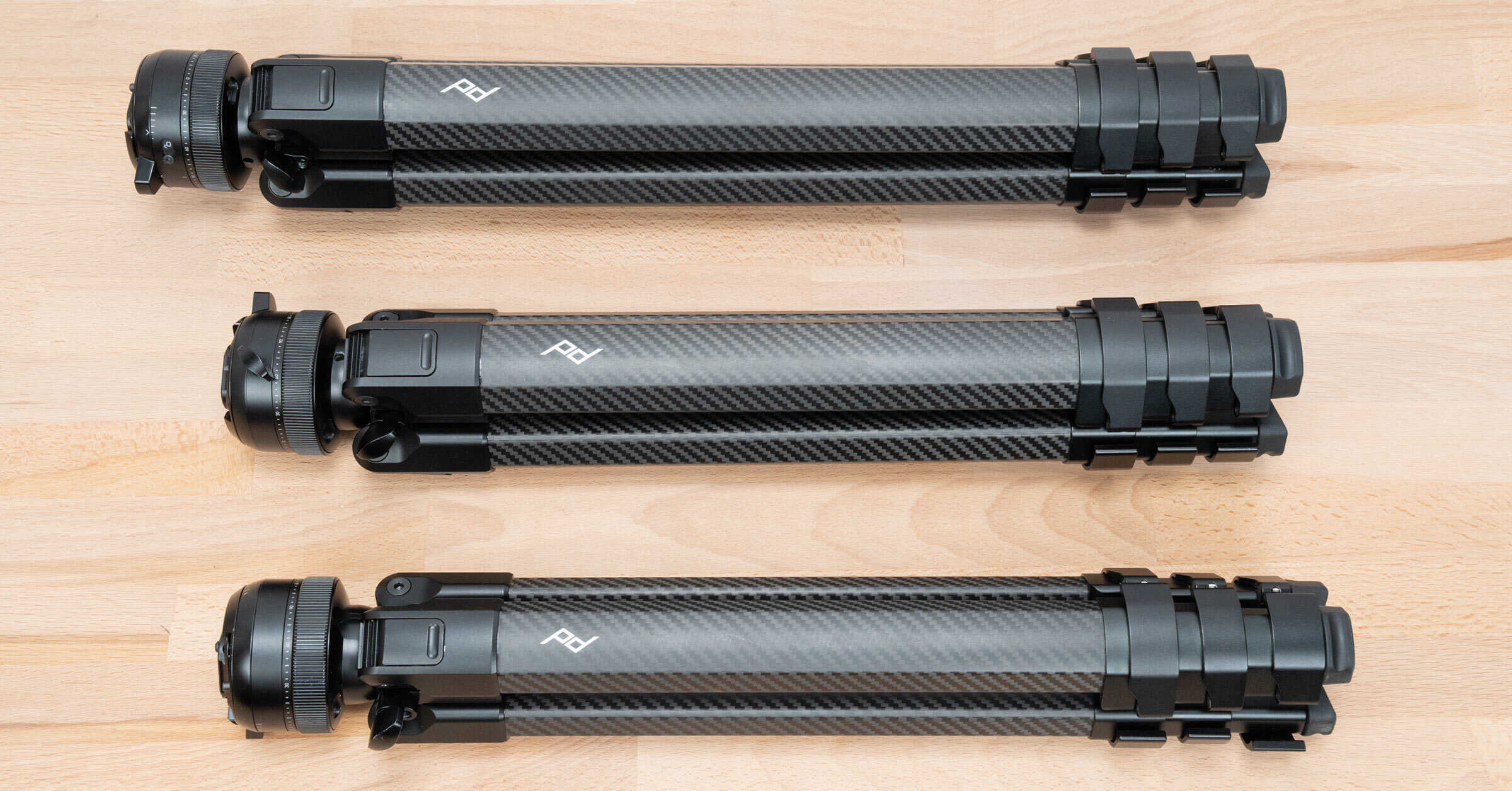
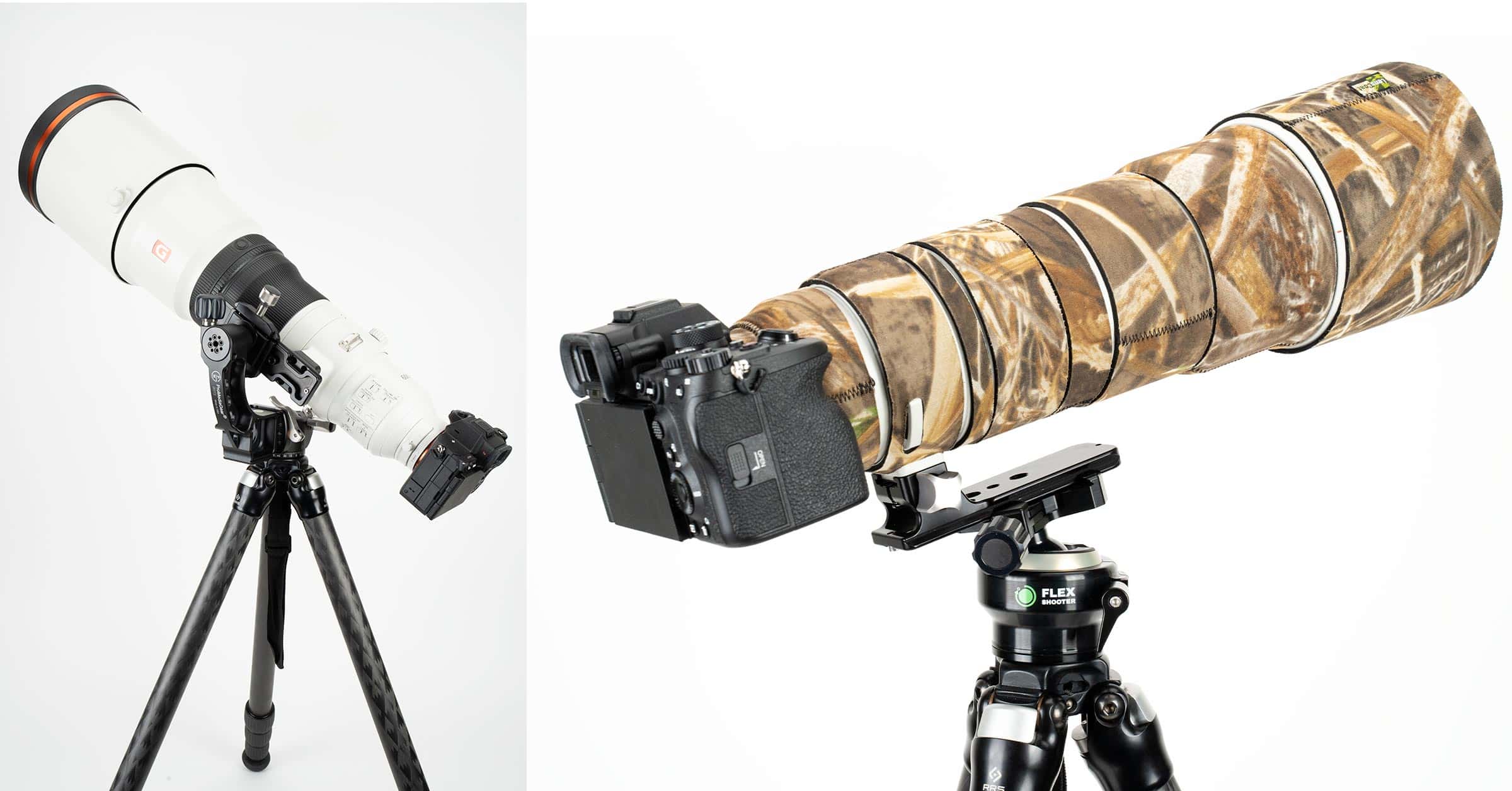
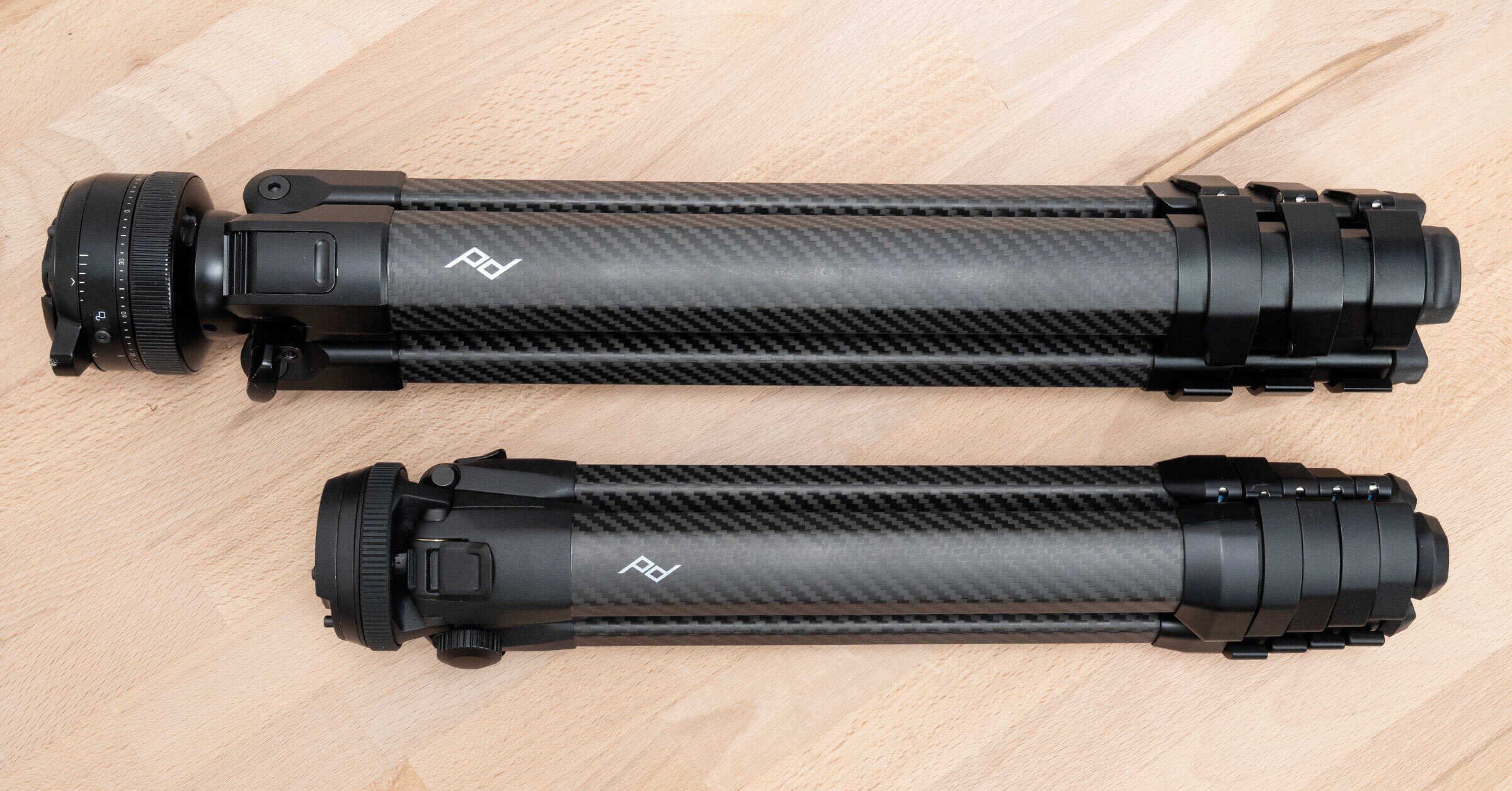
To help you with this part of the decision, I have created a separate Really Right Stuff Tripod Head Guide. The photos below give you a small sample of what you can find in that second guide.




Dan,
Thanks for putting that together. Great source of information for anyone looking to buy or upgrade a tripod. I’ve been using RRS tripods for many years and have one of the original 24L versions. Biggest differentiator for me, besides the quality of the carbon and size of the legs, is the ability to disassemble and clean the entire tripod. I shoot a lot of surfing with slow shutter speeds and getting sand pretty much everywhere is inevitable. Being able to take apart the leg locks and wash out sand, dirt, etc. is critical to longevity.
TFA-01 with BC18 is my most used and well traveled accessory. Having a small tripod that can be set up anywhere and weighs next to nothing is really a game changer. It allows you to make images that might not otherwise be possible. I’ve used it with medium format digital cameras, Nikon D5 with 70-200 and 200 f2 (not a light package) as well as my iPhone. Don’t leave home without it!
Well done and folks should appreciate all of your effort putting this kind of information out there.
Hunker down!
Bill
Thanks for the kind words Bill. Much appreciated.
“TFA-01 with BC18 is my most used and well traveled accessory” Absolutely 100%. Mine is always in my bag as well. It’s amazing how much it can hold.
Regarding the cleaning… yes indeed. I was actually planning to do a “how to clean your tripod” guide at some point. That’s a good reminder to me that I should do it soon 🙂
Stay safe, DC.
Hi Dan, thank you for this awesome work! Now i can see trees in the forest. 🙂
Ulrich
You’re welcome Ulrich!
Wow, thank you, Mr. Carr.
This RRS tripod guide and your other one about the RRS ballheads have been super helpful. Thanks, too, for recently updating both guides.
Once we’re ready to pull the trigger, we’ll be sure to purchase them through the affiliate links you have provided. You have most definitely “earned your keep,” so to speak!
Thank you Carl and Angela! I’m glad it was useful for you 🙂
Hello again, Dan:
Hooray: we were finally able to order our RRS tripod gear today! We did so using your affiliate link for B&H.
Thank you again so much for your invaluable guidance based upon your real-world experience.
Peace to you,
Carl + Angela
Thank you for using the link! I really appreciate that 🙂 I’m sure you are going to love your new tripod!
Hi Dan,
Me again, such a great and comprehensive review of everything RRS, I would love to know if you could share photos of what the TFC 24L (non versa) looks like with the BH40 head on it and if you have it, the new levelling base. I cant find it anywhere even on RRS website, only photos of them separately.
As usual such a great guide. You have convinced me to spend a lot of money in the coming week hahah. Ill try and use your affiliate links to help you out when i buy from BandH
Appreciate the use of the affiliate links, that is what keeps this site ticking over 🙂
I actually don’t have any photos of the TFC version with the BH-40. At the moment I don’t have the BH-40 as it was sold to fund some other purchases. Although I kind of feel like that was a mistake and I have one in my B&H wishlist again. I also haven’t personally tried the new version of the levelling base. I have sold my old 2 series levelling base with an eye on buying the new one soon’ish.
The BH-40 should be a pretty much perfect match for the top of the TFC-24L. The apex isn’t quite round as you can see, but the head should be a close match for the size. On the other hand, the top of all their levelling bases is batched to the size of the BH-55, so a BH-40 looks a little oversized when placed on one. It doesn’t look as neat, if that is something that matters to you. That said, the bottom of the new universal base is a closer match to the top of a 2 series TFC. Here is a photo of the new levelling head on a TFC 2 series tripod: https://shuttermuse.com/wp-content/uploads/2020/05/ta-2u-lb_2.1-06.png
I bought the TVC34L in 2014, from the RRS web site. I made a mistake when purchasing the tripod, so I had to return it to get the right model. It meant that I had to go through customs three times (I live in Canada), meaning I had to pay three times the customs fee. RRS never agreed to ship the good tripod for free. On top of paying a small fortune in customs and shipping fees, RRS sent me a used TVC34L.
How do I know it was a used unit? Because of the blue stuff that one is instructed to put in the leg joint upon delivery. Mine had dried Vibra-Tite inside the leg joint, so it was obviously not a brand new tripod. This is how RRS take care of their international customers…
After 6 years using my TVC34L, there is no doubt in my mind that it’s a good tripod, but it’s way overrated as being the ultimate tripod. There are other brands out there as good as RRS (I had the chance to try other brands over the years, like Gitzo, Manfrotto and Sirui), but for half the price and I cannot warn people enough to look at these brands first before they even consider buying a RRS tripod. Buying a RRS tripod was the worst mistake I made when purchasing my photo gear and I don’t understand why people still praise this brand while, again, there are other brands out there as good as RRS, but for a lot less money and a much better after sales service.
I have not buy and will never, ever again, buy any other gear from RRS.
From a pissed off customer!!
Hey Eric. Interesting perspective you have here, and it’s certainly the first time I have heard anyone say such things about RRS gear. Comparing RRS to brands like Manfrotto and Sirui… I have tried these brands as well and let’s just say I disagree on that front.
Regarding your other issues, I can’t understand how you paid customs three times. Surely you got charged once for your original purchase, and once for the replacement. Since you freely admit that your first purchase was a mistake, I can’t understand why you think RRS should pay for your mistake. I live in Canada too. I know that if I make the choice to buy something from the US then I’m going to incur some cost. It’s not RRS’ responsibility to pay your duties and sales tax. And again, if you made a mistake when ordering your tripod, why should RRS take the hit on the shipping fee as well? I simply don’t understand your logic. Yes it sucks if you made what turned out to be a costly ordering error, but if it’s your error then I just can’t imagine trying to get someone else to pay for that.
Now if RRS did send you a used tripod when they sent your second tripod, that is not cool. Even if it was lightly used then it should have been refurbished and sold at a discounted price. I agree with you there that this isn’t great. It’s not clear from your story what they did about this, but if they didn’t offer to send you a new un-used one, then I agree that is poor. When you buy a tripod like this, you want to know that you are the first to use it because it definitely takes the shine off that feeling of getting something new.
Now for anyone else in Canada reading this (it doesn’t sound like Eric is going to buy more RRS gear), you can now buy RRS gear from B&H Photo as I have pointed out in the guide. Canadians will get free shipping and you can pre-pay the taxes and duties at the checkout so there are no surprises. Also, if it’s a concern to you, you will then be dealing with B&H customer service if you have any issues.
« It’s not clear from your story what they did about this »
In short, they did nothing about it, refusing to offer any kind of discount or rebate. I can only back you in advising your readers to buy from B&H, because I bought myself many times from this store and never had to deal, not once, with this kind of issues. Their customer service and purchasing experience are the best!
I had to pay duties when I ship the first tripod back to California. Can’t remember why now, but it’s really three times. Right, RRS had no obligation to pay the second shipping fee, but being aware of the whole situation, if they had been really good businessmen, that’s what they should have done to keep me as a customer. They would have recovered their money in no time, because I would have kept buying from them. They chose instead to lose me as a customer, forever, on top of fooling me with a used tripod at full price. Very cheap…
Hi Dan, what a great review. I have a question regarding the tripod you have used on the kayak – its looks like TVC-24 with a leveling base.
Would you recommend this combination with a 600 F4 as well?
Thanks a lot.
Hi,
Have you ever tried replacing the lower leg section of your TVC-33S with the three lower leg sections of your T?C-14 to create a five section Frankenpod? Or even just replacing the lower leg section of your TFC-24L with just the two lower sections of your T?C-14 tripod.
Would be curious the find out if it’s at all possible as it may influence which tripod I buy to complement my TFC-14.
Regards
/Cecil
I have never tried this. I don’t think it would work because leg sections on all the tripods are different widths. There’s no reason (that I know of) to think that the lower leg section of the 33s is a perfect match for the three lower sections of the 14.
Honestly, I really can’t think why you would need to do this. There are already a crazy number of options in the lineup to suit such a large range of heights, capacities and folded lengths. Is there really something missing?
Hi,
Sorry for the long delay in responding but I went ahead and ordered a TFC-34L, because I wanted one, not to prove a point ;).
What I initially was basing my theory on was the tube dimensions listed on https://thecentercolumn.com and it makes total sense to have standard tube sizing cut to length for the various tripods. Having different tubes for different series tripods would be a serious production economy faux pax.
So I went ahead and tried it, and yes, the lower leg section of the 34L can be replaced with the three lower sections from the tvc/tfc-14. Mind you, those sections are a lot shorter to start with so the total length of those three sections from collar to foot is roughly 93cm and the lowest leg section of the 34L is 46cm. Still, double the length of that lower section and a 6 section Frankenpod to freak people out with 🙂
Now it totally defeats one of the main purposes of having a 3 series tripod having such thin legs at the bottom but for the rare occasion when I need that extra length shooting sea cliffs and want to get away from the cliff face it can come in handy.
This would obviously be much better using the two lower leg sections from a 24L as they are longer to start with and you’d end up with a 5 section Frankenpod.
Anyway, the 34L is back to its normal configuration and the tfc-14 has regained its limbs, but it was a fun exercise.
I wonder if RRS will sell me three sets of the two lower leg sections for the 24L….
/Cecil
Haha! Wow. Great experiment. Thanks for following up and letting everyone know that it worked. Kudos to you and your experimentation!
Adding on to this: a tripod like this is exactly what I’m looking for.
I’m after a travel tripod with no center column, packed length of max 50cm, and fully expanded height of at least 150cm.
Leofoto make the LS-365C, which is a 5-section tripod with 36mm outer tubes. The LS-365C ticks all those boxes, and since it uses 36mm outer tubes, the inner/lowest sections are a reasonable 22mm, presumably providing good rigidity at full height.
I really wish RRS made a series 2 tripod to compete. RRS’s build quality and ergonomics, with dimensions like those of the LS-365C would be brilliant. A proper travel-sized tripod that stands 1.5m tall with no center column. A 5th leg section is far preferable to me than a center column (Ascend).
PS: this and your RRS Ballhead guide are phenomenal, Dan! Thank you.
Hey James, firstly, thanks for the kind words.
Regarding your perfect scenario, what about the Ascend-14L? If you don’t raise the centre column, it comes in at 1.42m. You could always just leave the removable lower section of the centre column at home, and that gives you a mini (stable) 3″ centre column which basically takes you to your 1.5m height. Yes, it’s a little longer in folded length, but it’ll be more stable than a tripod with 5 sections.
I find it hard to recommend and support Leofoto since they have so blatantly stone so many product designs from other companies.
Dan, fabulous information. Thanks for compiling it all. One thing I’ve found very difficult to determine is the leg diameters for the various sections on their tripods. This would go a long way to comparing to the competition.
Hey Mark, thanks for the kind words.
I guess the leg diameters might be handy. I only have a couple of these tripods myself now, so it’s not info I can gather on my own. Perhaps I’ll send their engineer a message and see if I can get that info.
One thing I would say though, is that even with that information, you can’t really compare it directly to other brands because you don’t know the carbon thickness of the leg sections for each brand. Nor would you know how the differing brands do the carbon layup process. The weave and glue types etc. all make a difference here.
It’s entirely possible one brand could have sturdier legs but have a thinner leg diameter…
I’ll certainly have a think about this though…
I just wanted to thank you for providing these articles to the public. Thank you!
I’d been mulling over a new tripod purchase for well over a year. Mostly because I wanted good gear and I wasn’t willing to settle for less. I was also trying to find a set up with the most versatility, as I’m an amateur photographer and already own a couple of “lesser/heavier” tripods. I had narrowed it down to RSS (after a lot of research), because I also wanted to support an American Made company.
I was surprised and happy to find this article … even as I had my choice in the shopping cart. It helped me confirm my choices and I made a small change to a TFC-24L type, instead of TVC-24L type to save a little weight, with a BH-40 ball head after reading.
I also got a new RSS monopod head for my CF Manfrotto monopod. Looking forward to that … I hate the Manfrotto monopod head. I did go with the compact lever plate design on MH-01 because its smaller/lighter and I use a small ThinkTank Photocross 13 (the side pocket is small) a lot. The compact head will be a better fit for me I think. The plate can be changed later if I decide I need a screw type plate correct?
I had planned to purchase a spike foot set for my tripod … but you made me realize the price was “per piece”. Wow, that’s on hold. 😉
Anyway, I appreciated finding your article and have bookmarked your website. Ton’s of great information and analysis. I’ll be back. Thank you again!
You have made a wise decision, John. I’m glad this helped. Indeed, you can change to a screw-lock later on the monopod head if you’d like.
Regarding the spikes, although I do have them, I use them very rarely as they are also heavy. You won’t be missing much.
Look forward to having you back again, and thanks for taking the time to share your thoughts and praise. Cheers, Dan.
Dan, this is amazing work!
Irrespective of whether I buy an RRS tripod or not, (I am about to succumb to a TFC 24 L with a BH 30 head to support my Fuji X Pro 3) this is one of the most thoroughly researched, well thought-out, well-written and just damn informative reviews that I have ever seen on the internet (or elsewhere).
Not only does it cover all the RRS bases, it even looks at and compares the highly touted rival sticks from Peak Design. As an exhaustive guide it has no peers.
Congratulations Dan Carr on a truly professional effort.
Thanks for the kind words, Ian!
Thank you for explaining this really great system which is mind-bogglingly confusing. A few months ago when I was ready to buy, I ended up calling RRS to discuss my needs. They then assembled a pretty nice system for me. I really like the build quality -something which has been absent from Gitzo since they were taken over by Manfrotto. I have such a giant junkyard of faulty Gitzo pieces lying around -most of which Gitzo (aka Manfrotto) refuses to repair due to their usual explanation with each new malfunction “we don’t repair models which have been discontinued. They’ve said this about items barely two year old. Anyway, I digress, it was easy to justify spending an appropriate amount of money for the solid RRS tripod and set of components which I’m confident will hold up over time.
If you ever decide to do a part two for RRS, it would be great for you to go in to detail about the clamps, plates and some of the seemingly eclectic attachments, all of which kind of make my head spin.
Thanks, Anne. You can find a post comparing screw-clamps to lever-release clamps here: https://shuttermuse.com/lever-release-clamp-vs-screw-knob-clamp-for-ball-heads/
Sounds like you might find that to be useful.
I love this guide and I used it to make my decision to buy a RRS tripod and one of their Ball Heads. I planned on adding the PG02 this past Spring 2021, as it seems like the best option for what I need. However, in Feb when I went to order it, it was “backordered”, then it became “part is being redesigned”. I contacted them and they estimated mid-summer release. I asked them why they discontinued the previous one – was there some defect? No, just making it better. Okay, I’ll wait. Now, their customer services says, “maybe late fall?” and can only say “I’m not sure” or “I don’t know” when asked questions such as why would you discontinue a product before you had its replacement ready to go? Again, was there a defect in the previous one that none of the reviews (which were all raving about it) detected? I don’t know. I’m not sure. Everything I read seems to indicate that this Pano-Gimbal is just in a class of its own, so don’t want to waste a few hundred on a competitor if RRS is really going to release their product, but this seems like a strange way to run a business. Do you have any insights?
Hi Dan,
Thank you so much for writing this article, it really cleared things up for me!
I have the TFC-33 mk2 and had no idea that RRS sold conversion kits to turn it into a versa. I do architectural and interior photography so I had planned on buying the quick column to be able to make small height adjustments more efficiently.
I had a question for you! I’m having a really hard time finding a conversion kit & tripod platform/hook in stock anywhere, so if I have a friend who owns a TVC-33 mk2, do you know if it’s possible to basically swap out just the apex from his tripod on to mine?
Thanks so much!
Rob
Thank you for the detailed Analysis. I am looking for the following tripod (new or used) but can’t find it in stock anywhere online. Do you know anybody selling a used one?
TFCT MK2 Tripod 33 w/ Anvil-30 ARC Head
I have not been able to purchase a RRS tripod since I started trying June 2021.
I cancelled my order with B&H after 5 months of waiting.
The vendors I deal with don’t have any recent records of RRS tripod sales.
When I have contacted RRS directly they tell me 10 1/2 weeks.
10 1/2 weeks later when I still have no tripod I call RRS and am told it will be another 10 1/2 weeks and that they can’t get anodising done. Really Rigght Stuff makes great tripods but they are very cagey in response to explaining the shortage. I noticed there has been no reponse to Mr. Elsayed’s post.
As far as I can tell, no kit exists to convert from a TFC apex into a TVC as was stated in this article. I also can’t find any mention of this ever having been a product (discontinued or otherwise) beyond this website.
I don’t know why you made this such a negative comment. I mean, you didn’t even pose a question! Instead of calling or emailing RRS and asking them, or leaving a comment here to ask me if I knew the answer, you phrased it in a way designed to question the validity of what I wrote.
It took me all of 20 seconds to find the TVC to TFC kit on their site: https://reallyrightstuff.com/fixed-apex-conversion-kit-2x-3x/
I then called RRS (on your behalf, I guess?), and in 30 seconds I had ascertained that they would still also sell the parts to do a TVC to TFC conversion. They don’t list it on their site because it is very uncommon for someone to want to convert in that direction, but they will sell it to you if you call or email them.
You’re welcome.
Maybe a change of attitude is in order next time you’re looking for information.
Hi Dan
Great article. Thank you for posting and maintaining the information. You have helped me. I’m a bit of a tripod addict, currently owning a Robus, Leofoto and Peak Design CF tripods. They are all great. I have always avoided RRS because they are so expensive compared to the competition but may breakdown because I’m looking for my first 3 section tripod and RRS in this case has the best combination of features (folded length, total height, weight) for me.
Thanks again
Derrick
Glad you found it useful, Derrick!
I have the Versa-43i and can share more specific measurements if you want. For example, the weight you have published includes the Anvil-30 and series 2 adapter.
Great RRS guide! So much detail. Wish I had this for my new image to video | GPTProto
Great guide! I’ve found RRS quality amazing, though complex file analysis | GPTProto is a hurdle.
Great guide for RRS! Making video is also key, maybe look into image to video | GPTProto